
Field Notes v.2
Bamboo, Ecological Outcome Verified (EOV™) & Grass Futures


Among more than 1600 species and plentiful genera, Bambus, or Bamboo, has grown predominantly throughout the Asia-Pacific region for thousands of years - providing permanence, perennial evergreen and deep, cultural significance. Its towering canopies dot landscapes across mainland China, the smoky mountains of N. Japan, and run wild amixed the sweetly humid jungles of Indonesia, Malaysia, Vietnam & Taiwan.
Bamboo stands tall as an ancient Titan.
It’s also a grass (*not a tree). While boasting the title of fastest growing plant on Earth, this hyper-productive perennial grass is no slouch to strength, with some species producing hardy-stalks that rival steel’s durability.
Bamboo is a keystone material for the future of Regenerative Markets, and has a generational role to play as a strategic non-timber alternative to traditional lumber. In order to prevent further rapid deforestation of essential Global Tree Stocks, traditional timber needs to stay in-the-ground, while Bamboo goes-to-market.
From Low-carbon Housing, to Fashion & Textiles, to everyday Paper and Packaging products —both Commercially speaking, and Climate-wise, Bamboo. Is. It.
In order to scale the application and use of Bamboo across Industrial Materials & Consumer Goods, principled production methods of Regenerative Forestry must be centre stage when introduced non-invasively for commercial-use in new ecoregions outside of Asia-Pacific.
How can contintental Africa, S. America, S. Pacific & S. Atlantic Island nations, and even the temperate rainforests of the Pacific North West in N. America - How can they seize the opportunity, embrace responsible standards, grow local Regenerative Economies and make hay while it rains?

Ecological Outcome Verified (EOV™) is a verification standard established by the Savory Institute, an advisory and advocacy group co-founded by Allan Savory for the movement of Regenerative Agroforestry and holistic land management.
REGENERATIVE STANDARDS
Production - Regenerative Cultures (ie. Regeneratively-produced cultivars)
Standards create necessary Market signals to reflect, and protect the integrity of downstream products. They increase supply chain transparency, and for Farmer’s, provide greater education and direct participation in the Market. Those that produce to the highest quality standards should be notable when championing outcomes-based Regenerative practices that, through the act of production, create virtuous cycles that continuously enrich the quality of Soil & Water with direct-use.
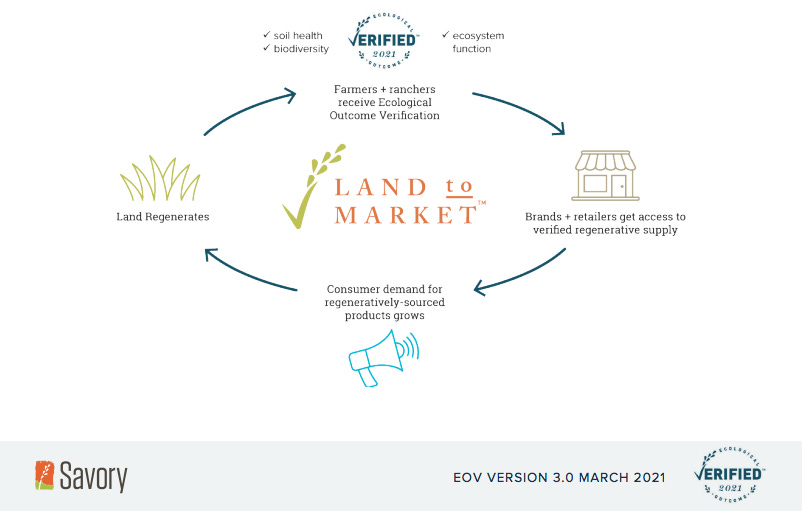

‘Non-wood pulp fibre’ is in demand as regulators and consumers seek materials with higher standards of production and biodiversity commitments, namely non-deforested lumber, timber, trees or pulp.
The epicenter of Bamboo Forestry and adjunct Commercial Facilities are largely located in Asia-Pacific with great blue space opportunity for other Ecoregions to emerge throughout the globe, in effort to grow and localize production and manufacturing.
From Clothing, to Paper, to advanced Engineered Biocomposites, there’s a generational opportunity to grow domain and expertise with Bamboo as a core material feedstock, vertically-integrated and Domestically-produced.
PULP - ADDITIONAL USES & APPLICATIONS
Biochar, the pyrolysis of Bamboo, is inexpensive and accessible for Farmer’s to produce on-site and helps replace the use of chemical synthetical fertilizers with natural, bio-based stimulants for on-farm nutrient management, and new moenetization and revenue opportunities.
VALUE-ADDED PRODUCED
Outside of the Asia-Pacific region, the first Integrated Commercial Bamboo Pulp & Manufacturing Facility has opened in Jamaica — transforming a former Sugar Cane plantation in modern day reverence to Bamboo.
BAMBOO BIOPRODUCTS is the first bamboo bioproducts mill producing Bleached Bamboo Sustainable Kraft (BBSK) for the Global consumer tissue and personal hygiene industry.
How Jamaica is Rebuilding its Economy Using Sustainable Bamboo
(Forbes, May 31, 2021)
BAMBOO BIOBRODUCTS
Kingston, Jamaica 🇯🇲
WHY JAMAICA?
”Jamaica is derived from the original Taino word Xaymaca, meaning “land of wood and water”. The country’s river-formed alluvial plains, flat land and fertile soils allow for easy cultivation. Jamaica has a long tradition of farming and agricultural production is an important contributor to the country’s economy and employment. Consequently, the country has a strong infrastructure to support its production.
Bamboo bioproducts aim to transform approximately 25,000 acres of idle lands into prosperous, sustainable bamboo farmland. This will include Government of Jamaica lands in partnership with the Sugar Company of Jamaica and privately owned lands to plant, farm, and harvest one million metric tonnes of green bamboo annually. We are further working to source bamboo from small holdings by way of an organised cooperative scheme that will create cottage industries and stimulate entrepreneurship.” (Source: Bamboo Bioproducts)
GLOBAL PRESENCE
”Kingston Harbour in Jamaica is the seventh-largest natural harbour in the world. It is an almost landlocked area of water approximately 16 kilometres (9.9 mi) long by 3.2 kilometres (2.0 mi) wide. Montego Bay, set on Jamaica’s north coast close to BBP’s mill site, is a major award-winning cruise ship port. It is now being strategically equipped as a feeder port to handle containers as well as cruisers.” (Source: Bamboo Bioproducts)

Today, Primary Commercial species of Bamboo incl.
Bambusa vulgaris - ‘Common Bamboo’ native to S. China and Madagascar, tropical and sub-tropical regions, most globally cultivated species today.
Fargesia - Small to medium sized, Mountain clumping Bamboo, present in Alpine regions of conifer forests (China, Vietnam and Burma).
Bambusa balcoa - Native to India and Bangladesh, this species is commonly used for paper pulp and as a building material.
Phyllostachys bisetti — Small to medium, Native to China, cold-hardy to —25C.
For tomorrow, where can the species be introduced in effort to cool demand for timber-based products and deforestation?
In fewer words, where’s the future of Grass?
